Sustainable kitchen cabinets are often discussed through surface labels: recycled content, low-VOC finishes, or a fashionable “eco” look. Those details matter, but overseas buyers also need to ask a more practical question: how many replacement cycles can the project avoid?
A cabinet that looks responsible at installation but swells, peels, corrodes, or needs early replacement is not a low-waste choice. Material lifespan is where stainless steel earns serious attention.
Replacement is the hidden cost
Kitchens work harder than most rooms. Steam, cleaning products, food acids, impact around handles, and repeated drawer movement all punish cabinet materials. In humid apartments, coastal villas, serviced residences, and rental properties, small material weaknesses become expensive over time.
When a cabinet body fails, the waste is bigger than the cabinet itself. Countertops may need to be lifted, plumbing or appliances may be disturbed, and the room can be out of service. For developers and distributors, that means warranty pressure as well as material waste.
Why stainless steel lasts differently
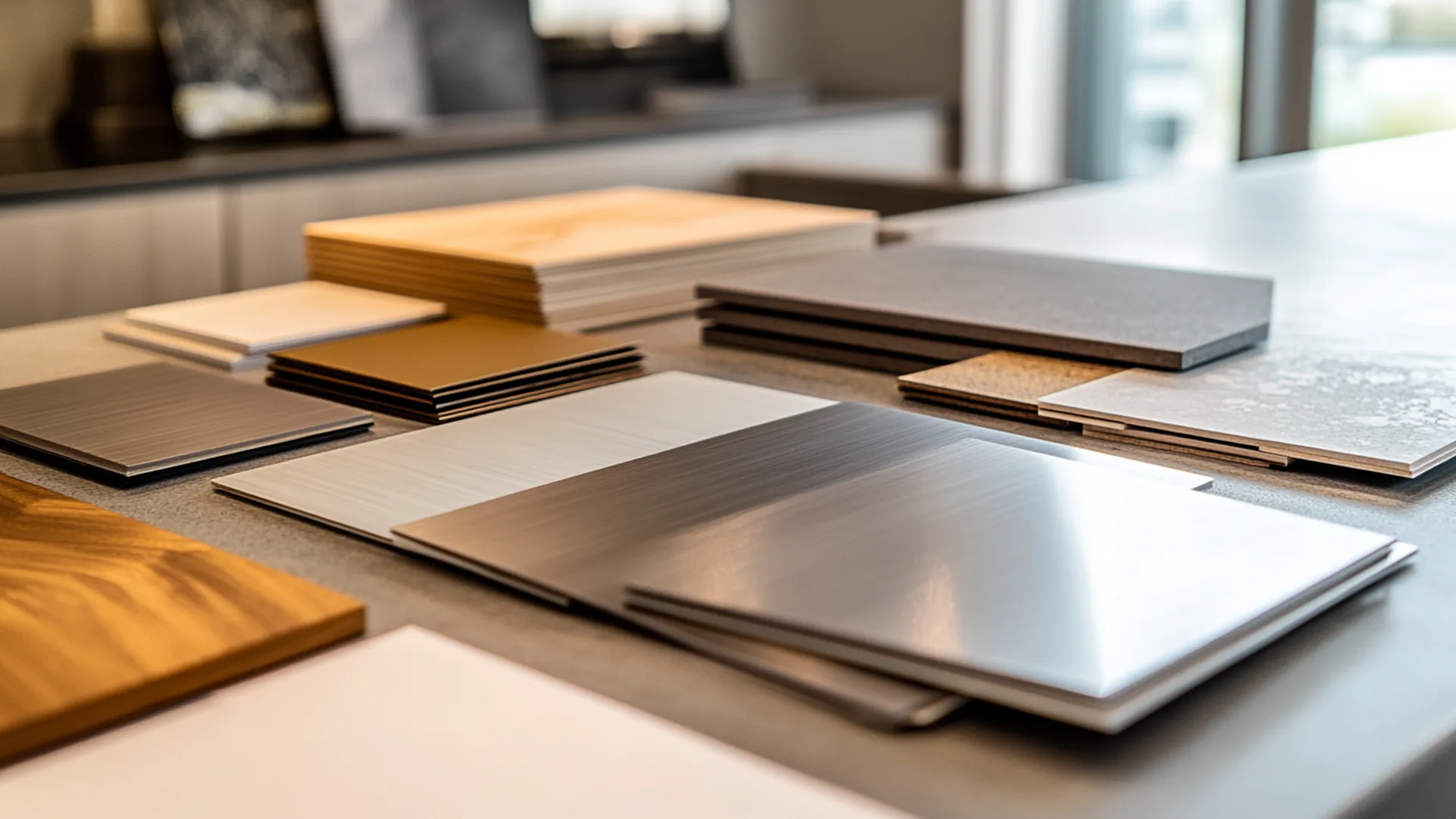
Brushed 304 stainless steel is non-porous, dimensionally stable, and not vulnerable to swelling from moisture. It does not rely on a thin decorative film to protect a wood-based core. For outdoor or coastal conditions, 316 stainless steel can be specified where salt air and chlorides make corrosion resistance more important.
That does not mean every project needs the same grade or finish. It means the cabinet can be specified around the environment instead of forced into a single decorative system. Indoor kitchens, bathroom-adjacent storage, outdoor kitchens, and humid climates each deserve a different material conversation.
The most sustainable cabinet is often the one that does not need to be replaced early.
Design still has to feel warm
Longevity should not make a kitchen feel clinical. Stainless steel works best when it is paired with natural materials that soften the room: oak or walnut wall panels, honed stone, warm lighting around 2700K, ceramic accessories, and careful handle details.
This is why many Zovia projects start with both material and atmosphere. A buyer may want a kitchen that is durable enough for heavy daily use, but the final room still needs to feel residential, calm, and easy to live with.
A better brief for buyers
Instead of asking only for a “sustainable cabinet,” write the brief around use conditions:
- Will the kitchen be indoor, outdoor, coastal, or high humidity?
- Which surfaces face water, heat, food preparation, or frequent cleaning?
- Should the finish hide fingerprints, soften reflections, or match warm materials?
- Which parts need to be repairable, removable, or easy to clean?
Zovia can help buyers turn those answers into a material and finish specification across kitchen cabinets, outdoor kitchens, wardrobes, and bathroom vanities. The goal is simple: choose cabinets that stay useful, cleanable, and visually relevant for as many years as possible.