Hardware is easy to treat as a small detail until the first drawer feels weak, the handle projection blocks an adjacent door, or a hinge choice makes daily cleaning awkward. In a stainless steel cabinet project, the body material may carry the durability story, but the hardware decides how the cabinet feels every day.
For overseas buyers, the point is not to memorize every hinge or runner model. The point is to make the hardware specification visible before production, so the cabinet drawing matches how the space will actually be used.
Specify the use case first
A kitchen base cabinet, bathroom vanity, wardrobe and outdoor module do not ask the same job from their hardware. Deep cookware drawers need a different conversation from shallow cutlery drawers. Tall wardrobe doors need stable movement over height. Bathroom and outdoor cabinets need special attention to humidity, cleaning routines and exposure.
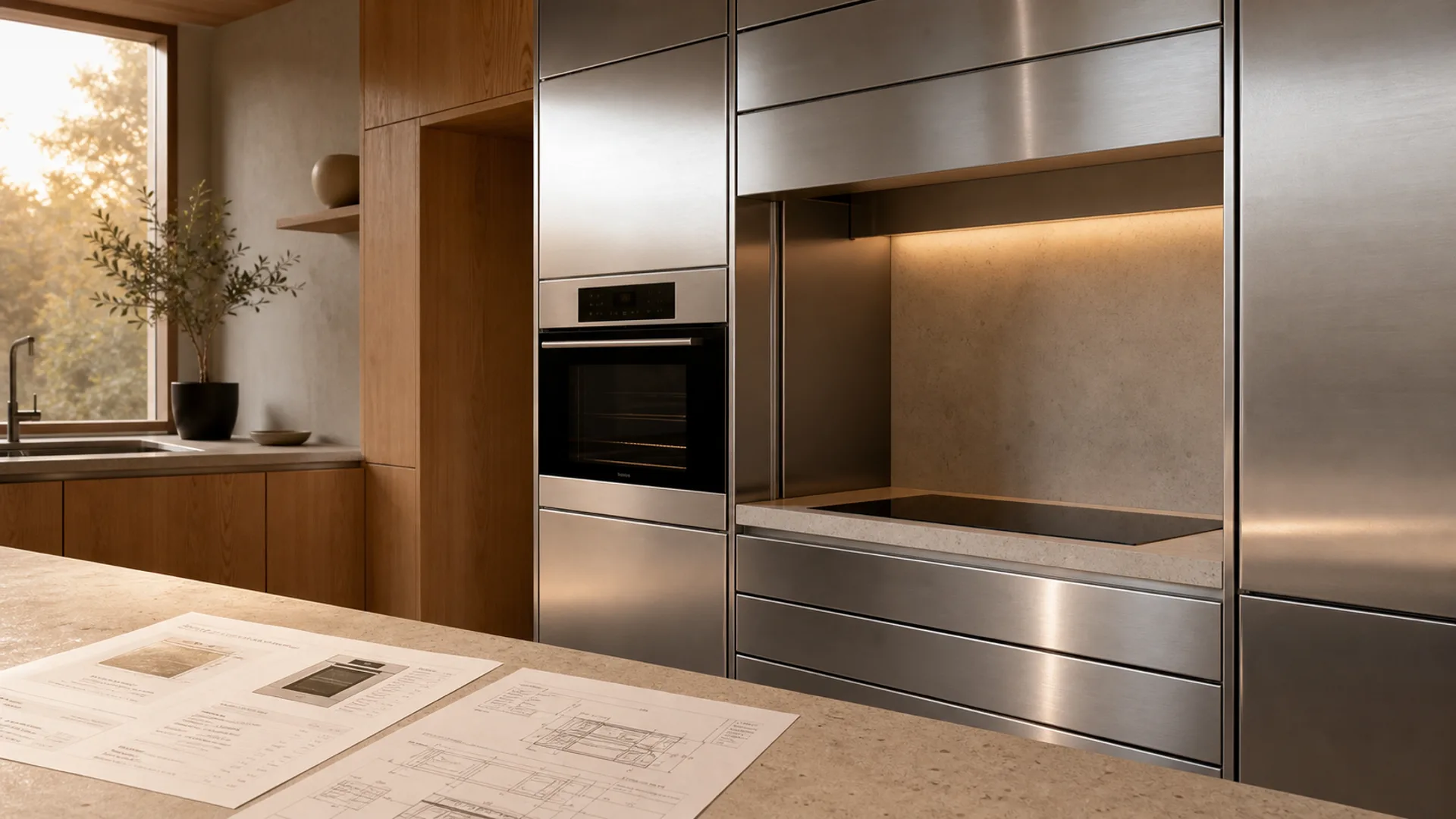
When reviewing a custom kitchen cabinet or broader indoor cabinetry package, mark the heavy-use zones, wet zones and high-frequency openings. That gives the factory a practical brief instead of a vague request for “good hardware.”
Make movement clear in the drawing
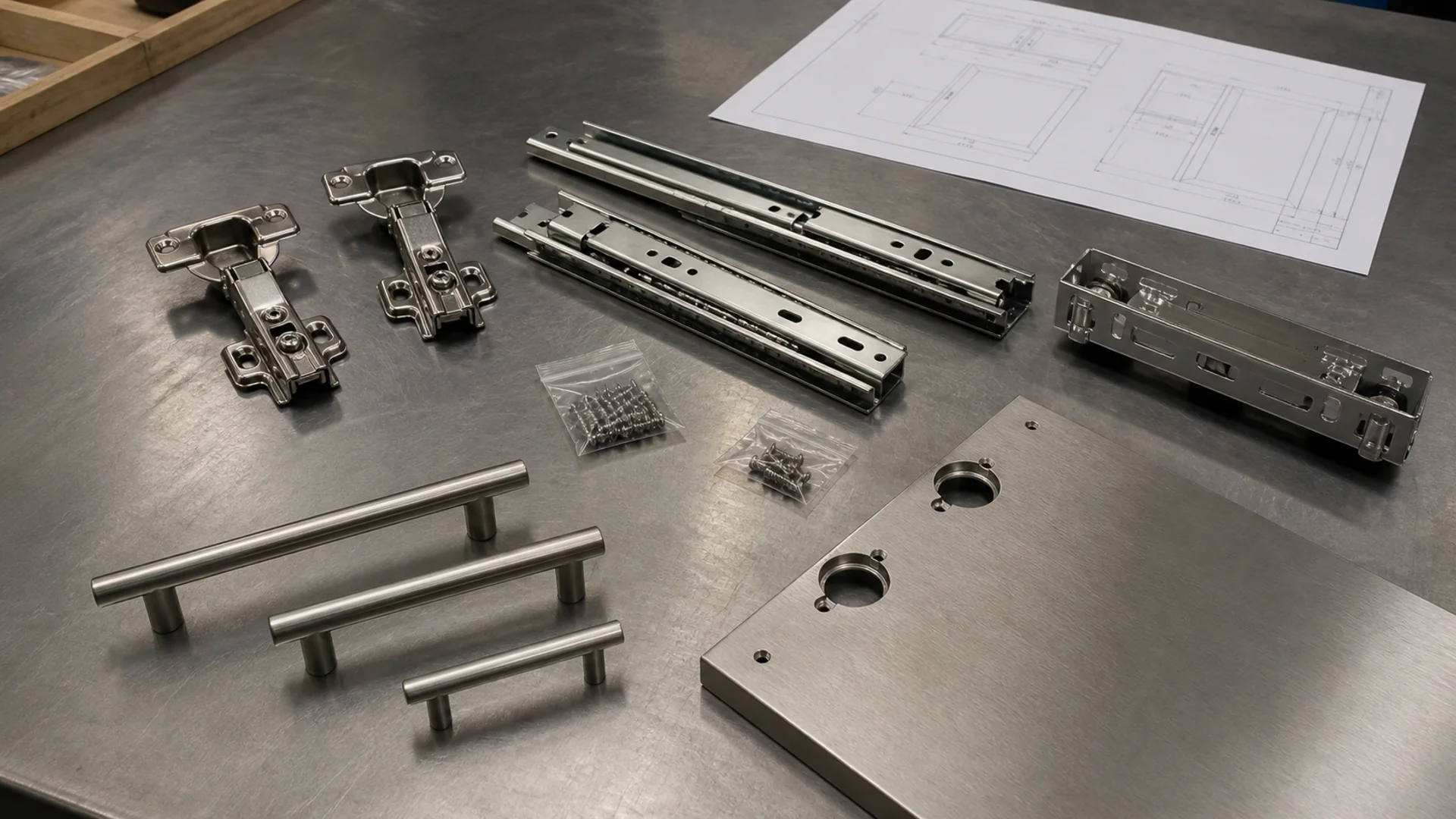
Hardware is three-dimensional. A handle that looks neat on elevation may project into a tight passage. A drawer runner may need more internal depth than the buyer expects. Hinges, lift-up fittings and pull-out accessories all need clearance to move without colliding with walls, appliances or neighboring doors.
Review the drawing for door swing, drawer travel, handle projection and service access. If soft-close movement, concealed runners or a particular opening style is required, state it directly in the approval notes rather than assuming it is understood.
Hardware should be approved as movement, not decoration.
Coordinate touchpoints with the steel finish
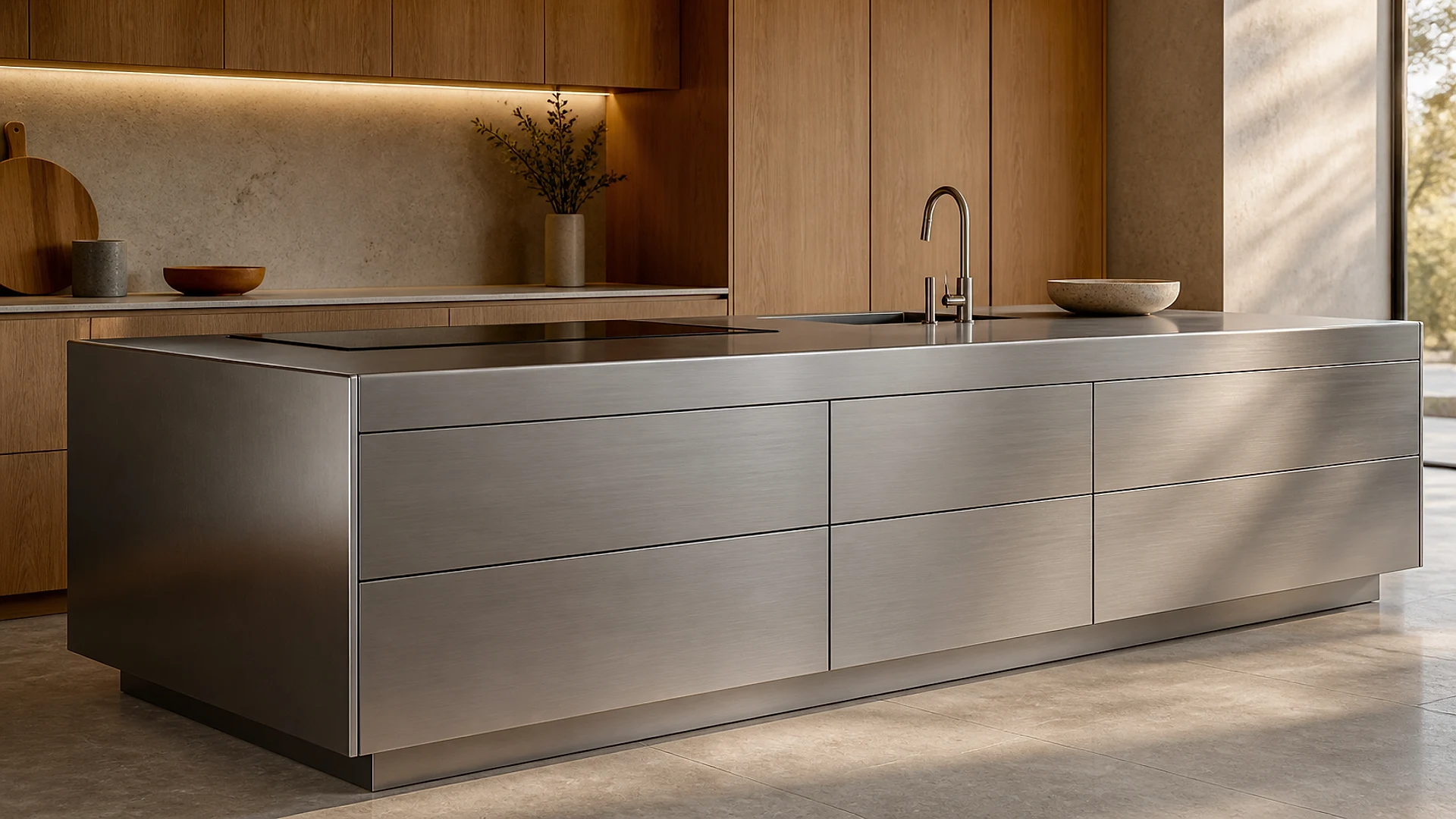
Brushed stainless steel cabinets work best when the visible touchpoints feel intentional. Long bar handles can emphasize horizontal grain. Smaller knobs can reduce visual weight. Recessed pulls may suit a minimal project, but they also change cleaning access and fabrication details.
Finish coordination matters as much as shape. A handle that is too shiny can fight against matte brushed steel. A darker metal accent may work well with wood or stone, but it should be checked against the full palette, not chosen from an isolated sample.
Confirm before production
Before approval, ask for the hardware decision to be tied to the cabinet drawings and finish references. A useful confirmation set includes:
- hinge and runner intent for each cabinet type
- handle style, position and projection
- any special opening method or concealed pull detail
- exposure notes for bathroom, coastal or outdoor use
- sample or finish reference for visible hardware
Zovia can discuss the cabinet body, hardware direction and finish coordination as one system when the project brief is clear. Send the drawings, room context and usage priorities early; the result is a stainless steel cabinet that feels considered each time it opens, closes and gets used.